Monday, January 23, 2017

Force and Motion


The one science area that seems to give teachers the heebie jeebies is physical science! It doesn't have to be that way. There are so many great hands-on lessons, activities and games out there that will make not only learning more fun, but teaching too! Have a look at the great resources below, and take a deep breath. That force and motion unit could just become one of your favorites!!

1.  PATTERNS OF MOTION AND FRICTION.  This site has a great video, lesson plan, activity guide and much more!  It's terrific!


Lots of links here for everything you need, gravity and magnetism, Newton's law, forces in sports and more!


LOTS of hands-on activities for force and motion here, 24 of them, in fact!


2.  Need some hands-on activities? Check these out!


This is a fun one called 19 Fun Ideas and Resources for Force and Motion


These StudyJams are activities on simple machines, gravity, inertia, acceleration and more!


If you want great hands-on activities for your classroom, you can't do better than Steve Spangler!!


3.  Games make learning fun! Add these to centers, or for early finishers!


20 games here!

                                  http://interactivesites.weebly.com/physics-and-motion.html


Great games on pushes and pulls, friction, gravity, magnetism and more.


Enjoy this great site given to me by two blog readers who LOVE science named 
Choloe and Ella


Get great task cards, point points or Boom Cards that zero in on all the skills your kids need for Force and Motion!


Be sure and follow me on Pinterest at: 


Need a Force and Motion resource? Check out this resource in three different formats by clicking the picture.


Tuesday, January 10, 2017

The Seven Habits of Highly Effective Reading Instruction!


Instructional time is precious to all of us! It seems there is always something infringing on my time. One day it is a special program in the gym, the next it's a fire drill. Then there are the daily time eaters to contend with. So, it's imperitive that every minute of teaching time be used to the fullest. That's especially true with reading instruction. It doesn't matter if it's a whole class lesson, or one to a small group, instruction needs to follow solid research on what really works. What does work? Below are seven teaching habits that have been shown, by research to increase reading comprehension. I know we all use most of them, but take a look and see if there's one or two you could add into your instruction. They really do make every minute count!

1.  Monitoring comprehension 

As kids read they need to be able to "catch" themselves when meaning is lost. They need to know when they don't understand what is going on, figure out what they don't understand and use strategies to fix the problem. Teachers can use story maps, summarizing activities and think-alouds as part of their instruction to help with monitoring comprehension. 

2. Metacognition

This just means that students learn how to think about their thinking. Questions teachers use before, during and after reading help to set a purpose, monitor understanding and check the student's understanding after reading. Keep a list of questions for both fiction and informational text in your lesson plan book or guided reading book to keep them handy. Metacognition is critical for successful reading comprehension and needs to be taught to most students.

If you would like questions for before, during and after reading informational texts, you can download a freebie on another post of mine at: Here Comes Guided Reading: Freebie

3. Use of Graphic Organizers

When students use a graphic organizer it forces them to dig into the text. They help kids make connections between concepts and how they are related, help students see the differences between fiction and nonfiction, and help them write good summaries. There are LOTS of free ones on the Internet. Here are a couple I like: Graphic Organizers from Edhelper   and Graphic Organizers from Education Place

4. Text Questions

Answering text questions gives kids a reason for reading, focuses their attention, helps them think as they read, helps them monitor their comprehension and review what they have learned. Teachers can use questions such as: right in the text questions. The answer is explicitly given in the text. "What color was the sky?"  Questions that are in the text, but require thought. "Why was Jack feeling sad?" Questions that require students to use prior knowledge, "How do you think Henry felt when he was lost his dog? What in your life helps you understand how he felt?"

5. Generating Questions

This one takes some very explicit instruction. Teaching students how to ask their own questions about the text involves teaching them how to make questions about the main idea, the plot, the theme and so on. By making up their own questions students not only realize if they can answer their own questions or not, but helps them understand if the really do understand what they are reading.

6. Story Structure

Research tells us that when students receive instruction in story structure, they improve comprehension. so keep instructing and reviewing  characters, setting, events, problem and solution.  Story maps helps with this.

7.  Summarizing 

A student who can summarize understands the text. It helps students decide what is really important in the story and put it in their own words. Only a reader who fully comprehends a story can do that. Summarizing helps students identify the main ideas, decide what is really important in the story, and remember what has been read.


There are a number of ways to teach these 7 habits:
Modeling for students
Direct instruction
Guided practice

Happy Teaching!!  If you have any other ideas please add them below!


Adapted from Reading Rockets: Seven Strategies to Teach Students Text Comprehension by C.T. Adler

Do you need a resource to help you teach guided reading? Check out:


Follow me on Pinterest for TONS of ideas and freebies:


SaveSave

Monday, January 9, 2017

Valentine Math Freebie


I love Valentine's Day at school.  It's the one holiday that's calm. Sigh. It's also a great time to use a liitle "love" to get the content across. Below is my Valentine math freebie that meets third grade standards. It includes a grading key and the Common Core standards met.  It's also very good for fourth graders who need review.  


Have a great Valentine's Day!

Tuesday, December 27, 2016

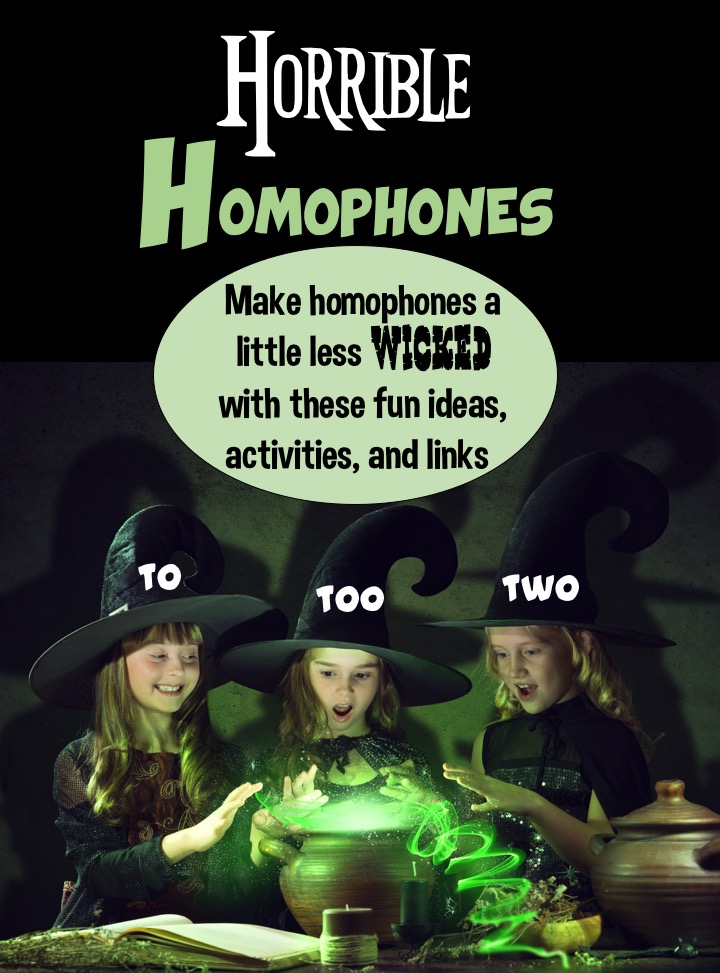
Horrible Homophones


OMG! Homophones! If there's one thing that can give kids fits, it's homophones! Oh! And teachers too...homophones can drive any teacher straight up the wall.  I don't know how many times I've said, "What? How can they still be using the wrong homophone? I just taught it last week?" Sure, I would teach a number of them in my "homophone lesson",  but as Yoda would say, "Remember them, they didn't."

Time for a change. The definition of insanity is doing the same thing over and over again and expectiing a different result.  On my quest for a little sanity it was time to change how I taught homophones. The first thing I had to realize was how important it is for kids to learn how to spell homophones. It's not optional.

Why learn homophones?

1.  Knowing how to use homophones helps kids learn how to write and analyze different kinds of figurative language, that includes wordplay such as puns and idioms.

2. Many high-frequency words are homophones (knew, new) (to, too, two) (there, their, they're)

3. The idea of reading and writing is to convey meaning. Knowing the correct spelling for the meaning of the word is crucial to understanding and comprehension.

4. Knowing how to spell homophones gives students a sense of accomplishment.

5.  Kids are usually enthralled to learn about homophones. They're interesting. Use that interest to help them play with words. The important word being...play!

6. As kids grow into adults, using the wrong homophones is a literary faux pas.

My Experience

Luckily, at the same time I decided to change how I taught homophones, my school started using Sitton Spelling. This program turned teaching spelling on its head. I had always been a poor speller, and I finally understood why after going through the program. Homophones take a special place in the Sitton Spelling program. One set of homophones are addressed at a time, then reviewed every week multiple times in writing, games, and evaluations. For third grade I focused on the "to's" and the "there's".  There wasn't a day that passed that one of the homophones wasn't addressed in some way. It's that repetition that was the key. Short, constant repetition and holding the kids responsible for spelling the "to's" and the "there's" correctly. was key. Yes, we did move on to a few other homophones the second half of the year. But they also got the repitition treatment. That much repitition can be a real drag unless there is lots of variety and fun to it. So, to make that repetition more fun, try some of the strategies below. They work!

Number one tip: Teach only ONE homophone word first. Really focus on that spelling, using it in sentences, and demonstrate using it correctly. Once students feel proficient with that spelling, homophones of the words can then be introduced. It's like giving kids some ground to stand on before moving on. 


Activities

1. Add a homophone word wall. As you add homophones, add them to the word wall with the definition. Ask students to draw a small picture of the homophone's meaning and add the word and the picture in a homophone section of the reading or writing notebook.

2. Ask kids to write silly sentences using all of the homophones in a homophone set. i.e. "My sister wanted to go too when I went ice skating two days ago."  Ask students to get into groups of three and check each other's spelling of each word, then post them on the board or wall.

3. Play the "Shake It" game.  Start saying a list of words. (go, dog, shop, this, to,) When you say a word that is a homophone, students must shake a body part. Ask a different student each time to name the body part that should be shaken for the next list.

4. As students learn a number of homopones, play Homophone Old Maid. Divide students into groups of four students each. Use 20 homophone pairs you have studied to make playing  cards. Cut out rectangles in the size of playing cards and write a homophone on each card. Then make four old main cards to add to the deck. Have students take turns choosing a card from the student next to them. When they get a match (or a word and an old maid card) they call out "homophone" and show both cards. To actually win the match for the two cards the student must make a sentence using each homophone correctly. When all cards are used (there may be some left over due to old maid cards) the student with the most matches wins.

5. Ask students to use the homophones you have covered and make a fill-in-the blank for another student to answer. They provide the homophone choice at the end of the sentence. They must also provide a grading key. For example: 1. I went ____ the store. (to, too or two)

6. Create homophone riddles. "What do you call a  pony with a sore throat?  A hoarse horse."

7. Have a contest to see which student can put the most homophones in one sentence and still have it make sense.

8. Make a crossword puzzle that gives clues for the homophone used and students must fill in the correct homophone. There are many crossword puzzle makers for teachers such as: Puzzle maker  There are lots out there.

9. Play Homophone Memory. Write all of the homophones you wish to review on index cards. Students turn the set upside down and take turns turning two up at once. They may keep any set they match. The student with the most matches wins.

10. Play a homophone relay race. Divide the class into two groups. Have one person from each group come to the board. Say the homophone being used, then read it in a sentence. The first student to write it on the board wins the round. The team with the most points wins.

11.  Play Homophone Pictionary.  Again, divide the group into two teams. Choose a word that is a homophone. Show it only to the students at the board. The first to draw a picture the gets the correct response from their team wins the point.

12.  Hand out the same copied article, newspaper advertisement, etc.  Ask students to find any and all words that are part of a homophone set. The other homophone does not have to be in the article.


Now for some fun online games! Free of course all from Turtle Diary


This is a fun one for fourth graders and up. A homophone is given and students shoot the matching homophone. 


This one is a simple activity that asks student to identify if two words are homophones or not. 


In this game the student must eat the homophone before the lizard does!


I hope these ideas come in handy while you teach homophones...all year long of course!
If you have other games or ideas please add them below!

Need some homophone resources? Check out the following resources by clicking on the cover:


This Boom Card bundle covers all of the major homophones for 2nd-4th grades!

PowerPoint

Homophone posters, Work sheets and even a game


Follow me on Pinterest for TONS of great ideas and freebies for your classroom:


SaveSaveSaveSave

Tuesday, November 1, 2016

18 Thanksgiving Content Activities, sites and Lessons Kids Will Love!


I don't know about you, but during the holidays my kids are always just a little nutty. It helps SO much to have activities, books, lessons and even good bulletin boards on hand that go along with the holiday. It's like harnessing all that excitement and putting it to a good educational use! Below are some of my favorites. I hope you enjoy them to!


Let's start off with a great place to get lesson plans (already done....bless them!) on everything Thanksgiving. Includes reading a chart, videos, investigating the first Thanksgiving, Indian folktales, the Mayflower and so much more!


These terrific lesson on the First Thanksgiving are for grades 3-5 and from Scholastic. The site includes ALL of the materials you need (free) and covered 15 Common Core State Standards! This is seriously one great set of lesson plans!


This site from TeacherVision has everything you could want! There are tons of lessons that are both content, and some just for fun! They cover reading and language arts, Native Americans, slideshows, printables, lessons plans and so much more! This one will give you great content lessons for the entire month!


Scholastic has its act together...for sure with this site! It is perfect for fourth and fifth graders and includes teacher's guides!


For the Native American people's perspectives on Thanksgiving don't miss this great site! 


TURKEY FACTS

No one is really sure how the turkey got its name, but...there are a few stories!
a. Christopher Columbus thought that he was in india, so he thought the bird was a type of peacock. He called it "tuna" which is eacock in an Indian language. The turkey is actually a type of pheasant.
b.  The name the Native Americans gave the bird is "firkee", and that sounds a bit like turkey.
c.  Or...a turkey makes a "turk, turk, turk" noise and that may be the origin of the name!

1.  Benjamin Franklin wanted the turkey as our national bird instead of the bald eagle
2.  45 million turkeys are sold at Thanksgiving
3.  It takes a turkey 4=5 months to grow to maturity
4.  Only tom turkeys (the male) gobble
5.  Turkeys are the only breed of poultry that are native to the Western Hemisphere
6.  Turkeys can see in color, and have great hearing (even though you can't see their ears)
7. Domesticated turkeys can't fly, but wild turkeys can fly over short distances at speeds of up to 55 mph
8.  Wild turkeys often spend the night in trees
9.  The red fleshlike thing that hands off of a turkey's next is called a wattle.


Great Thanksgiving books for kids


1. The Mayflower and the Pilgrims new world by Nathaniel Philbrick. Students will understand the emptiness of coastal Massachusetts that greeted the Pilgrims, and find out how they learned to live with the Native Americans.


2.  My all time personal favorite is "Twas the Night Before Thanksgiving" by Dav Pilkey. A class's trip to a farm, just before Thanksgiving, ends up with a turkey on the bus!


3.  To teach second and third graders what life was like at the time of the Pilgrims, you can do better than "Magic Tree House, Book 27: Thanksgiving on Thursday". Jack and Annie are whisked back to the time of the Pilgrims on the eve of the first Thanksgiving. 


4.  "Thank You Sarah: The Woman Who Saved Thanksgiving" by Laurie Halse is the story of how Sarah Hale helped make Thanksgiving an official holiday. 


Thanksgiving Activities

1.  Make a Thanksgiving book mark

2.  Coffee filter turkeys: I did this almost every year with my kids. Give each kid a coffee filter, markers and a paper plate. Have a spray bottle handy for each table (or group of four of five students). They can color the filters as they wish, but all areas of the filter should be colored in some way with no white showing. Next put the filter on the paper plate and spray lightly with the spray bottle. The colors will run and mix.  I lay out a large sheet of bulletin board paper to then put the wet coffee filters on. Let dry overnight. Then make a turkey body and glue to the front of the coffee filter (which becomes the tail).  This makes a great cover for a Thanksgiving greeting card too. Just glue the finished turkey onto the front of the card. 

3.  Make a Thanksgiving cinquain poem.  Make a word web of things students see, hear, taste, smell or do at Thanksgiving. If students are not familiar with conquain poem they go like this:

One word (title
two words (describe the title)
three words (action)
four words (feeling)
one word (the title again)

It might look something like this:

Thanksgiving
Family dinner
Hustling,  bustling, laughing
Happiness is smiles wide
Thanksgiving

4.  After reading a number of books about what it was like in the time of the pilgrims, ask students to write five days worth of diary entries that a pilgrim child might write about their day. 

It's always helpful to have a choice of Thanksgiving worksheets to pull out when you need them. This site is terrific and is FULL of free worksheets that are pretty cute.


Don't miss this one...tons!!


Here are some great Thanksgiving bulletin boards/decorated doors I found on Pinterest. Love them all!

From My Classroom Ideas.com


This one just goes to an image, but it's an awesome door decoration!


Everything's better with minions!

And finally one more door!

Have a happy Thanksgiving!


To get TONS of freebies and lots of great ideas for your classroom visit me on Pinterest at: 

Visit my store to get LOTS of resources to put FUN into every school day!


Sunday, October 9, 2016

12 Halloween Sites You Don't Want to Miss!


Keep kids focused on learning, even through Halloween, with these fun sites that offer lots of lesson ideas, games and pure fun! Need an idea for reading? Math? How about social studies or science? Check out the sites below and keep them handy!


This is a great site filled with activities, videos and so much more!  Don't miss this one!

This great video from The Magic School Bus is all about Bats!


LOTS of great Halloween worksheets here! Perfect for fast finishers or morning work. 


                                         TONS of Halloween Lesson Ideas here!


http://www.halloween-website.com/tales.htm
I LOVE this website! It has LOTS of short spooky stories for kids to read for lit circles, guided reading etc.  Best for upper elementary for sure!  Be sure to check out all the goodies listed on the right hand site.


If you have upper elementary kids don't miss this one!  It has 15 Halloween Stem activities kids will love!


If you or a parent are planning that Halloween party, don't miss this site!


From National Geographic Kids
http://kids.nationalgeographic.com/explore/halloween-hangout/

This website has it all, animals, science experiments, and even games! There's lots of creepy goodies on deadly spiders and spooky games!


For Just some Halloween fun:
https://itunes.apple.com/us/app/make-a-zombie/id412694725?mt=8&ign-mpt=uo%3D4
This free app allows kids to make a Zombie!


This site is full of educational spooky games....emphasis on spooky!


From Teacher Planet
http://www.teacherplanet.com/node/365
Filled with just what you need: clipart, lesson plans, resources, worksheets and more all for Halloween!


Do you need a really fun Halloween resource about adjectives?  Check out: Creepy Town's Adjective Problem. It's creepy fun! Click the picture.